Free shipping on every order · Made in the USA · Third-party tested · 60-day money-back guarantee
CoreCurva
Benefits of Turmeric Supplements: What the Science Actually Says
Last updated: June 6, 2026
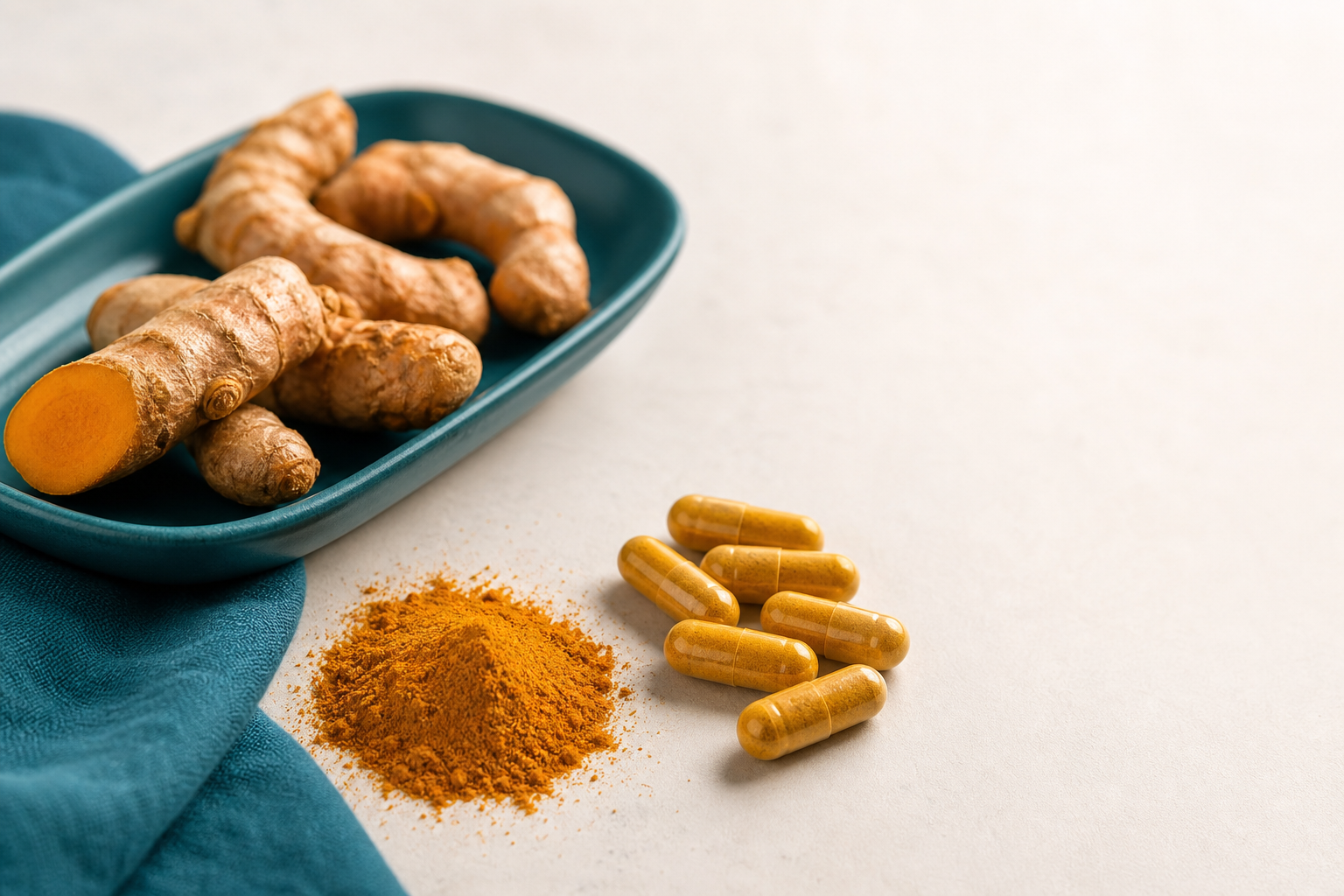
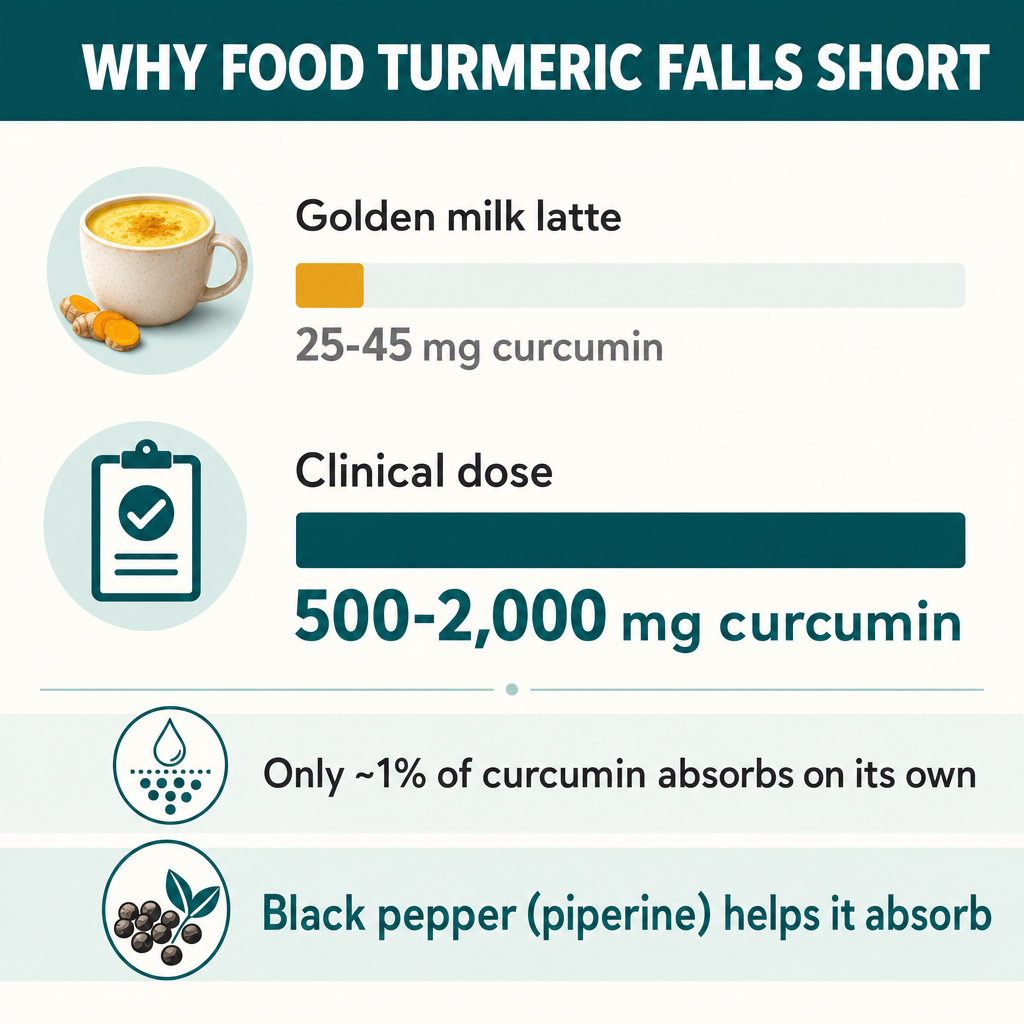
A daily golden milk latte sounds healthy. It's also a near-useless dose of curcumin. Golden milk is a warm drink made with turmeric powder, milk, and spices like ginger and cinnamon. It's a wellness trend that looks good on paper but delivers only 25-45mg of curcumin per cup, nowhere near what clinical trials actually use.
The science behind turmeric is genuinely impressive in places. Head-to-head trials have shown curcumin matching fluoxetine (Prozac) for major depression, with response rates of 62.5% vs. 64.7% [7]. In osteoarthritis, it has performed comparably to NSAIDs like ibuprofen for pain relief [3].
The catch is that 95% of how people consume turmeric makes those benefits impossible to access. The bright yellow latte, the spice rack jar, the curry once a week: none of it gets close to a clinical dose.
This article does three things. First, I'll explain the bioavailability problem in plain English so you understand why food turmeric falls short. Then we'll walk through the conditions where curcumin has the strongest clinical evidence: joints, gut, blood sugar, and mood. Finally, you'll get a short shopping rulebook so you don't waste money on the wrong product.
Note: Be sure to consult with your health care professional before taking any supplements or making changes to your diet or fitness routine. This article is for informational purposes only.
Why food turmeric doesn't work (and what does)
Turmeric and curcumin are not the same thing, and confusing them is the single most expensive mistake new buyers make.
Turmeric is the root. Curcumin is one of the active compounds inside it, and the one almost every clinical trial measures.
Turmeric root is only 2-6% curcumin by weight. The average Indian diet, often cited as the world's richest in turmeric, provides about 2,000mg of turmeric per day. That works out to roughly 60mg of actual curcumin.
Clinical trials showing real benefits use 500 to 2,000mg of curcumin daily. Food turmeric falls 10 to 30 times short of the lowest effective dose, and that's before we talk about absorption.
Absorption is the bigger problem. Of the curcumin you swallow, only about 1% makes it from your gut into your bloodstream.
Less than 0.1% reaches your cells [2]. Your body treats curcumin as a foreign chemical and works hard to flush it out through the liver before it can do anything useful.
Smart supplement makers solve this in three ways:
1. Piperine (black pepper extract). You may have seen the "2,000% absorption boost" claim. That number comes from a 1998 study with a near-zero baseline, so it's technically true and practically misleading [1]. Realistic boost: blood absorption rises to 5-8%. Cheap, helpful, not magic.
2. Phytosome and liposomal forms. Brand names to know: Meriva, Longvida, and NovaSOL. These wrap curcumin in fat carriers so it survives the gut. Studies show 29x to 65x higher absorption versus plain curcumin [2]. More expensive, usually worth it.
3. Take it with fat. Curcumin is fat-soluble. Pairing your dose with a meal containing eggs, avocado, olive oil, or full-fat yogurt routes it through the lymphatic system and dodges first-pass liver metabolism. This is a free upgrade.
Golden Rebound* uses piperine rather than a phytosome or liposomal form, and that was a deliberate call. The absorption data for phytosome systems is real, but the ingredient list gets opaque fast. Piperine is a single, disclosed compound with 25 years of human bioavailability research behind it. That was the tradeoff we made.
Once you've solved absorption, curcumin starts to earn its reputation.
Joint pain and inflammation: the strongest use case
If you only take curcumin for one reason, make it joint pain. The evidence here is the closest thing the supplement world has to a sure thing, and it's the category with the strongest clinical record.
Curcumin works by blocking the NF-kB inflammatory pathway, the same target ibuprofen hits. It also lowers C-reactive protein, a blood marker of systemic inflammation. This is why "antioxidant" and "anti-inflammatory" get used interchangeably with curcumin. They're really one mechanism.
The headline data: a 2022 meta-analysis of 29 randomized trials found curcumin produced clinically meaningful reductions in osteoarthritis pain and stiffness, with a favorable GI safety profile compared to standard anti-inflammatory treatment [3].
A note on timeline. This isn't instant. Joint and systemic benefits emerge at 4 to 8 weeks of consistent dosing, with full assessment at 8 to 12 weeks. Most people who say "turmeric didn't do anything for me" stopped at week two.
The honest caveat: curcumin works by dampening inflammation around the joint. That's what reduces the pain, not any cartilage repair. If your problem is structural (advanced arthritis, a torn meniscus, bone-on-bone), a supplement is not your answer. See an orthopedist.
The same anti-inflammatory mechanism explains modest benefits curcumin shows for blood vessel function and oxidized cholesterol, though those effects are smaller than the joint data.
Gut health: where curcumin works the fastest
In a randomized ulcerative colitis maintenance trial, the curcumin group's relapse rate over six months was 4.65%. The placebo group's was 20.51%.
That's nearly a fourfold difference. Patients in remission from mild-to-moderate UC who added curcumin to their standard medications were substantially less likely to relapse [4]. Curcumin was an add-on, not a replacement for prescription therapy, but the protective effect was clinically meaningful.
The IBS data points in the same direction. In one pilot trial, IBS prevalence dropped 60% in curcumin-treated patients over two months, with a 22-25% reduction in abdominal pain scores [5].
Why does gut benefit show up so fast when joint benefit takes weeks? Curcumin works locally in the intestine before absorption is even relevant. Remember the 99% of curcumin that never makes it into your bloodstream? It's not wasted. It acts directly on the intestinal lining and the bacteria living there. The bioavailability problem from the previous section is actually a feature when your target is the gut itself.
Realistic timeline: gut benefits in 7 to 10 days. If nothing has shifted in two weeks, your dose is probably too low or the product is poorly formulated.
One practical note. Even though absorption matters less for gut effects, take it with food anyway. It reduces the GI side effects (nausea, loose stool) that show up at higher doses, and it keeps your dosing routine consistent across all the other benefits.
Blood sugar and pre-diabetes prevention
One turmeric finding rarely makes it into mainstream health coverage: in a 9-month trial of 240 pre-diabetic adults, zero percent of the curcumin group progressed to type 2 diabetes. In the placebo group, 16.4% did [6].
That's one of the cleanest risk-reduction numbers in the entire supplement literature. Pre-diabetic adults split into two groups, identical lifestyle guidance, the only variable was curcumin versus placebo, and after nine months the divide was 0% vs. 16.4%.
The biology lines up. Curcumin improves insulin sensitivity and modestly lowers fasting glucose, typically 5–10 mg/dL in trials. It also reduces the chronic low-grade inflammation behind most metabolic dysfunction. None of those effects on their own would be earth-shattering, but together they appear to slow the slide from pre-diabetes to full type 2.
Honest framing: this won't reverse established type 2 diabetes, and it's no replacement for metformin. If you're already diagnosed, curcumin is at best a small adjunct. If you're in the pre-diabetic window with elevated A1C, it looks like a meaningful tool to use alongside diet and exercise.
A drug interaction warning matters here. If you take metformin, insulin, or sulfonylureas, curcumin can amplify the glucose-lowering effect and push you toward hypoglycemia. Talk to your doctor before starting, and monitor glucose more closely the first two weeks.
Brain health and mood: promising but less settled
The brain and mood evidence isn't as strong as the joint, gut, and blood sugar data. One finding is hard to ignore though: in a head-to-head trial against an SSRI, curcumin held its own.
Depression and mood
In the trial, patients with major depressive disorder took either curcumin or fluoxetine (Prozac) for six weeks. Response rates: curcumin 62.5%, fluoxetine 64.7%. The difference was not statistically significant [7]. A meta-analysis of 10 studies found a Hedge's g effect size of -0.75 for depression symptoms, a moderate-to-large effect by clinical standards [8].
The caveats are real. Most trials are small and enrolled mild-to-moderate depression, not severe cases. For mild symptoms, curcumin is a credible adjunct, ideally with a clinician in the loop rather than a substitute for care.
Brain health and cognition
Curcumin (in absorbable forms) crosses the blood-brain barrier and raises BDNF, a protein that supports neuron growth. This is the mechanism most often cited in the Alzheimer's prevention conversation.
In a 2018 UCLA study, adults aged 51-84 with mild cognitive complaints took 90mg of bioavailable curcumin twice daily for 18 months and showed a 28% improvement on memory tests versus placebo, plus mild mood improvements [9].
Read that honestly. Most cognitive benefit data comes from animal models and small pilots. The Alzheimer's prevention angle is biologically plausible but unproven in large trials. The more defensible case: the joint, gut, and blood sugar benefits you're already getting may carry a cognitive bonus.
The wrong product makes all of this moot.
Safety footnote: skip turmeric supplements without doctor supervision if you take blood thinners, diabetes medication, or are scheduled for surgery within two weeks.
Curcumin has real pharmacological activity, and that's the whole point.
Frequently Asked Questions
Does golden milk give you the same benefits as a turmeric supplement?
No. A cup delivers roughly 25 to 45mg of curcumin, while therapeutic doses run 500 to 2,000mg. That's a 10 to 50 times shortfall. Fat and black pepper help absorption, but golden milk is not a substitute for a properly dosed supplement.
Can you just eat more turmeric in food instead of taking supplements?
Not for therapeutic effects. To hit even 500mg of curcumin, you'd need 8 to 25 grams of turmeric powder daily, which nobody actually eats. Food turmeric is fine for flavor and modest gut support. Supplements are for clinical-dose benefits.
What are the side effects of turmeric supplements?
Most common: nausea, loose stool, and stomach upset, mainly above 1,000mg or on an empty stomach. Rare liver injury cases exist, roughly 1 per million users, almost always tied to very high doses or contaminated products. Take with food and stay under 1,500mg daily without medical supervision.
Who should not take turmeric supplements?
Consult your doctor first if you take blood thinners (warfarin, apixaban), diabetes medications, have active gallbladder disease, are pregnant or breastfeeding, or have surgery scheduled within two weeks. Curcumin has real pharmacological activity and interacts with several medication classes.
References
1. Shoba G, Joy D, Joseph T, Majeed M, Rajendran R, Srinivas PS. Influence of piperine on the pharmacokinetics of curcumin in animals and human volunteers. *Planta Med.* 1998;64(4):353-356. [PMID: 9619120](https://pubmed.ncbi.nlm.nih.gov/9619120/)
2. Hewlings SJ, Kalman DS. Curcumin: A review of its effects on human health. *Foods.* 2017;6(10):92. [PMC5664031](https://www.ncbi.nlm.nih.gov/pmc/articles/PMC5664031/)
3. Zeng L, et al. Curcumin supplementation for knee osteoarthritis: meta-analysis of 29 randomized controlled trials. *Front Immunol.* 2022. [PMC9353077](https://www.ncbi.nlm.nih.gov/pmc/articles/PMC9353077/)
4. Hanai H, Iida T, Takeuchi K, et al. Curcumin maintenance therapy for ulcerative colitis: randomized, multicenter, double-blind, placebo-controlled trial. *Clin Gastroenterol Hepatol.* 2006;4(12):1502-1506. [PMID: 17101300](https://pubmed.ncbi.nlm.nih.gov/17101300/)
5. Bundy R, Walker AF, Middleton RW, Booth J. Turmeric extract may improve irritable bowel syndrome symptomology in otherwise healthy adults: a pilot study. *J Altern Complement Med.* 2004;10(6):1015-1018. [PMID: 15673996](https://pubmed.ncbi.nlm.nih.gov/15673996/)
6. Chuengsamarn S, Rattanamongkolgul S, Luechapudiporn R, Phisalaphong C, Jirawatnotai S. Curcumin extract for prevention of type 2 diabetes. *Diabetes Care.* 2012;35(11):2121-2127. [PMID: 22773702](https://pubmed.ncbi.nlm.nih.gov/22773702/)
7. Sanmukhani J, Satodia V, Trivedi J, et al. Efficacy and safety of curcumin in major depressive disorder: a randomized controlled trial. *Phytother Res.* 2014;28(4):579-585. [PMID: 23832433](https://pubmed.ncbi.nlm.nih.gov/23832433/)
8. Fusar-Poli L, Vozza L, Gabbiadini A, et al. Curcumin for depression: a meta-analysis. *Crit Rev Food Sci Nutr.* 2020;60(15):2643-2653. [PMID: 31423805](https://pubmed.ncbi.nlm.nih.gov/31423805/)
9. Small GW, Siddarth P, Li Z, et al. Memory and brain amyloid and tau effects of a bioavailable form of curcumin in non-demented adults: a double-blind, placebo-controlled 18-month trial. *Am J Geriatr Psychiatry.* 2018;26(3):266-277. [PMID: 29246725](https://pubmed.ncbi.nlm.nih.gov/29246725/)
*These statements have not been evaluated by the Food and Drug Administration. This product is not intended to diagnose, treat, cure, or prevent any disease. Individual results may vary. The products sold are dietary supplements intended for use by healthy adults only. If you are pregnant or nursing, do not use this product. Speak with a licensed healthcare provider before beginning use, particularly if you have any underlying health conditions or are taking medication.
Store in a cool, dry location, and keep out of reach of children. The package is tamper-resistant — do not use if the safety seal is broken or missing.
Sentrivity LLC DBA CoreCurva - © Copyright 2026. All rights reserved.